The Art of Skillful Response and the Practice of Relief
What exactly is Dharma? It’s often associated with ancient texts and lofty wisdom, but practically speaking, Dharma is anything that releases, relieves, reduces, mitigates, or eliminates suffering.
It’s the move of compassion, from reminding a friend to use the guard on a mandolin slicer to receiving the pristine view handed down by 2,600 years of teachers.
As Stephen Bachelor noted, our practice of Dharma is simply our most skillful, wisest, and kindest response to the circumstances we find ourselves in. It’s a therapeutic, medical response to being human.
Crucially, this means the only person smart enough to know what’s right for your specific situation is you. Any teaching is offered with a tender heart and should be used only if it serves you. If it’s not medicine, leave it where you found it.
The Intimacy of Non-Attachment
The key movement in our practice is non-attachment. This is often misunderstood as cold detachment, but it is the opposite.
- Attachment is NOT intimate: When we cling to a situation or a concept, we objectify and solidify it, making it ungraspable and rigid—not intimate.
- Detachment is NOT freedom: Detachment is cold and aversive; it’s pushing away something we don’t like, which prevents us from examining its value or learning from our reaction to it.
Non-attachment is the most intimate state, born of, grown in, and sustained by trust. It’s the open hand, the open heart, and the open eyes approach.
It is the skillful movement of:
- Making deep contact: Touching deeply into your goals, values, and interests.
- Stepping back: Not clinging, but trusting your awareness to meet what is arising with kindness.
This is the quality of attention known as Sati-sampajañña—mindfulness and clear comprehension—which involves attending to and clearly knowing what is arising without critique, without judgment, and setting aside hope and fear.
The Gates Are Already Open
This practice of trust extends beyond our concepts and even our efforts. The Buddha himself, upon his awakening, is recorded as making an exclamation, or udāna, to himself:
“The gates to the deathless are already open. Let those who have ears trust in this.”
The Buddha wasn’t saying he opened the gates; he simply discovered they always already were open. The “deathless” (ungraspable, boundless awareness) is here and now. The one who “has ears” is the one who can hear, who can attend—the one practicing Sati-sampajañña. They are invited to rest in saddhā (trust or confidence) in this ever-available awareness.
The Sacred Burden: Dance and Sing
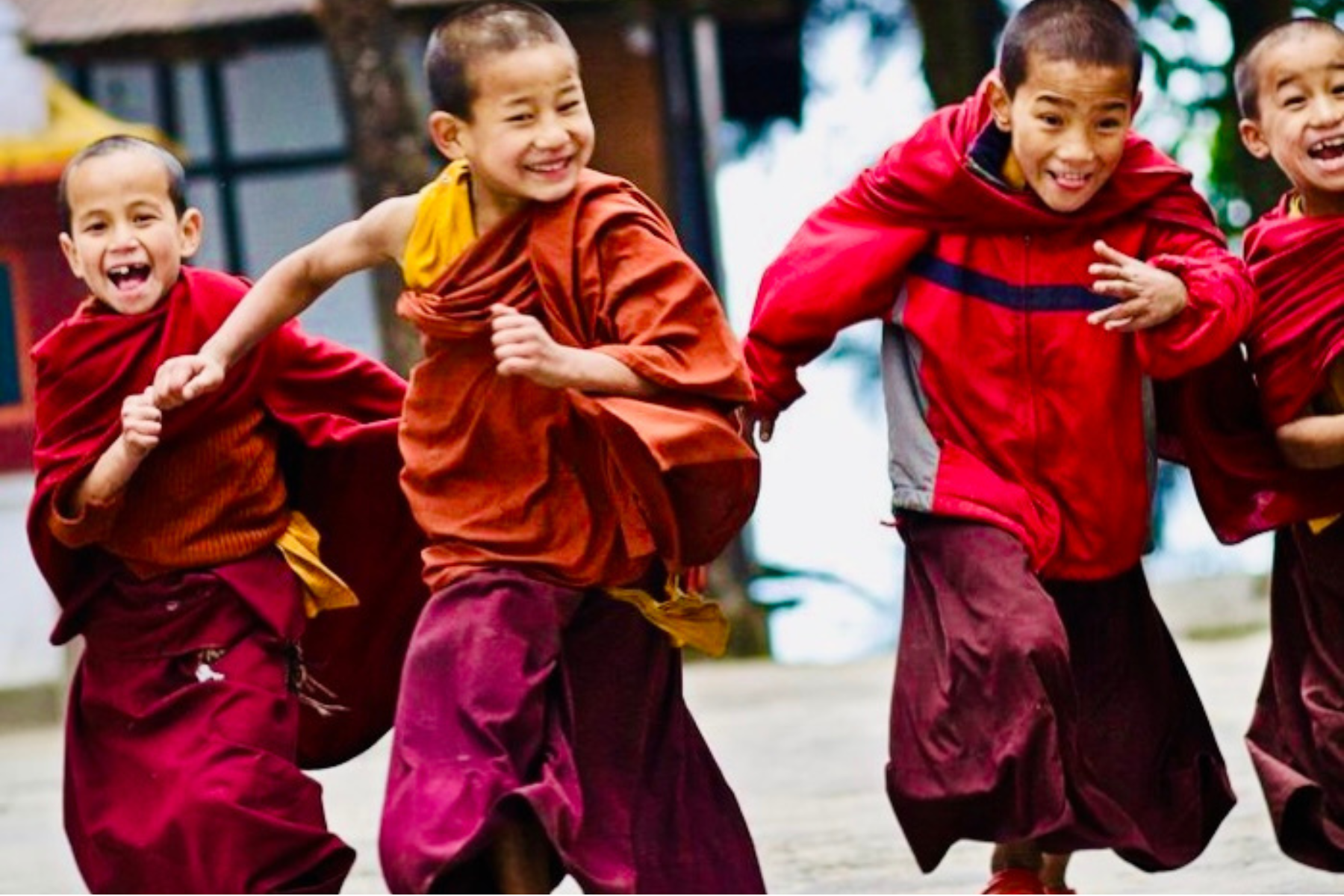
One of the most important—and most unexpected—instructions I ever received from a teacher was: “You should dance more.”
The ancient Hevajra Tantra echoes this sentiment with a simple verse: The practitioner should always dance and sing.
Dancing and singing are:
- Relational: They connect us to the moment and to others.
- Open and Available: If you collapse and worry about what you look like while dancing, the freedom is constrained.
The forms of our practice—the sitting, the walking, the chanting—are the steps to this dance. We are invited to this beautiful dance floor.
When you find yourself collapsing, contracting, or getting too serious, the instruction is to shake it off, breathe, and trust the movement. And remember: You dance with the body you have. If your knee hurts, you do the hurt-knee dance. If you are contracted, you dance in that constriction.
Your life is a unique song, and you are the only person who can sing it. It would be a shame if that song did not sound on the only planet where it possibly could.
May you dance, may you sing, and may you be happy.
To cultivate a skillful response to suffering, what simple, immediate act of trust, dance, or song can you bring to your next moment of constriction or attachment?